Envíos a toda ColombiaCompra segura y protegidaFacturación electrónicaAsesoría especializada
Ciudades inteligentes · caso documentado

Gestión de estaciones de carga de vehículos eléctricos

El router RUT241 conecta cargadores eléctricos a las plataformas de servicio usando Ethernet, LTE, Wi-Fi o WAN cableada.

RUT241
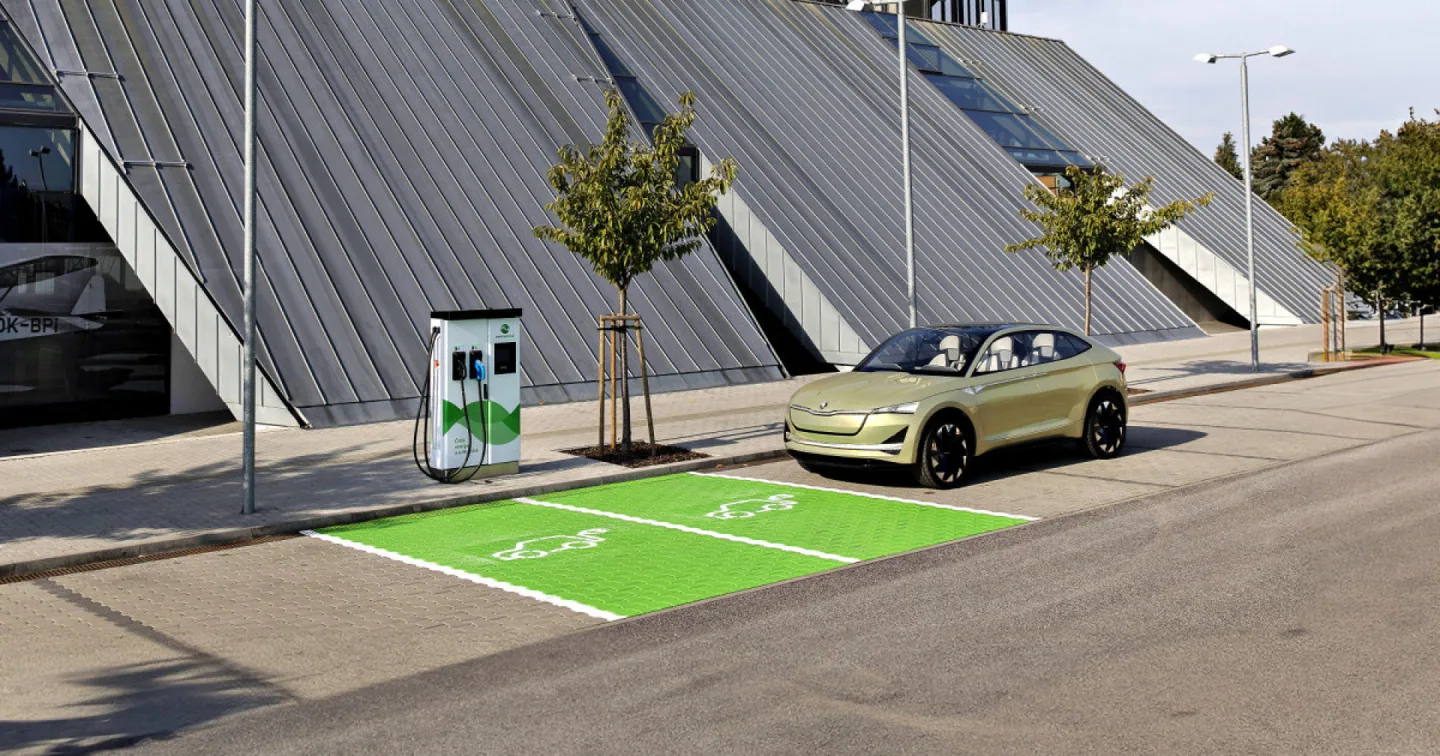
Imagen del caso Teltonika Networks: Gestión de estaciones de carga de vehículos eléctricos
Imagen del caso publicado por Teltonika Networks
SectorCiudades inteligentes
Proyecto / integradorCircontrol
Equipo documentadoRUT241
Referencia originalTeltonika Networks
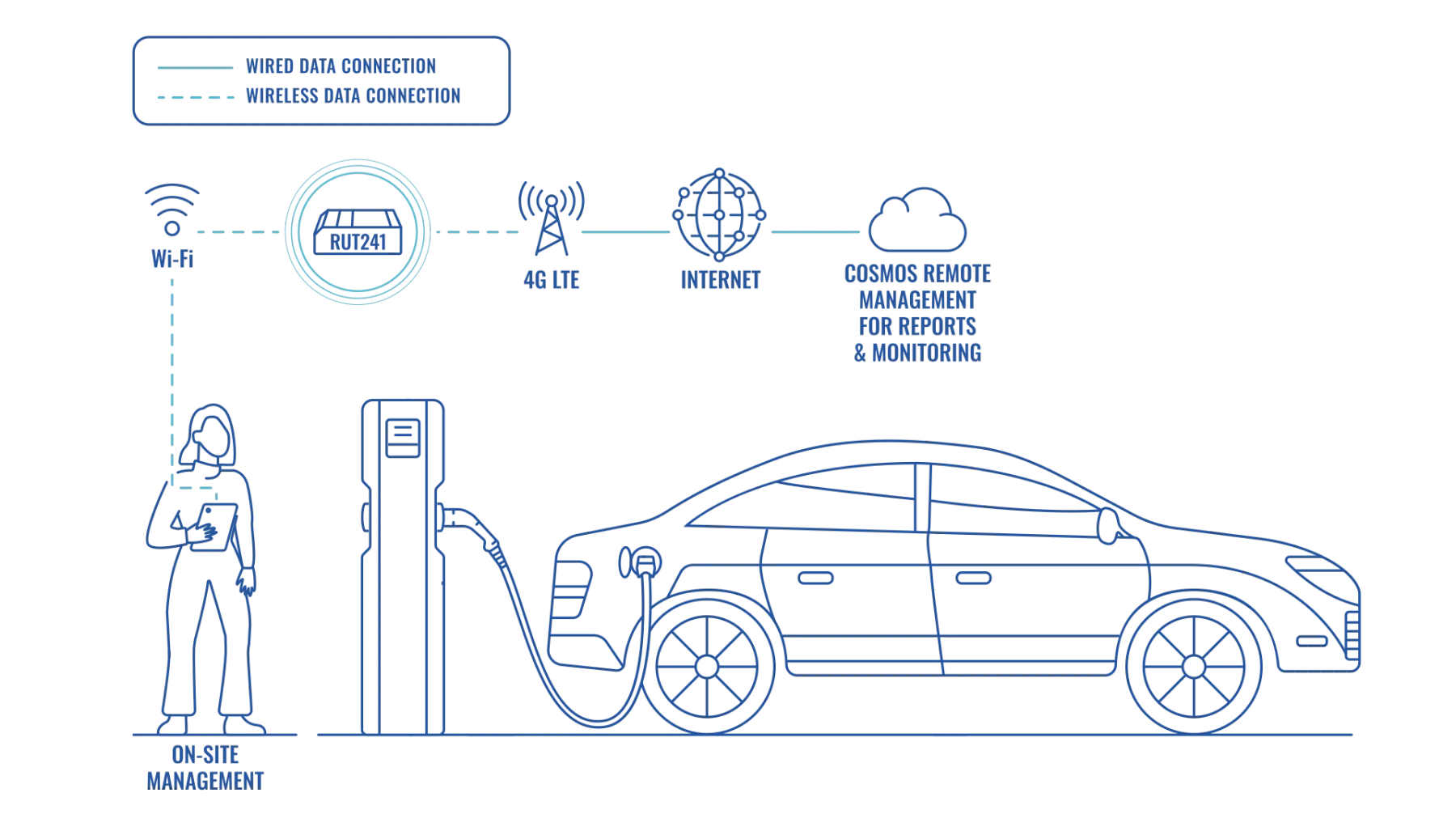
Esquema técnico del caso

Topología de la solución

El diagrama original muestra los equipos y enlaces que componen esta aplicación. Amplíalo para revisar sus conexiones.

Topología Teltonika de cargador EV: estación conectada por Ethernet al RUT241 y de allí por una WAN disponible a la plataforma.Ampliar diagrama
Topología Teltonika de cargador EV: estación conectada por Ethernet al RUT241 y de allí por una WAN disponible a la plataforma. Fuente: Simple EV charging management with an LTE router · Teltonika Networks
Recorrido de datos

Cargador EV → Ethernet → RUT241 → WAN LTE/Wi-Fi/cableada disponible → plataforma del operador de carga y administración remota.

El reto operativo

Qué necesitaba resolver el proyecto

Las estaciones de carga requieren intercambio de datos con sus plataformas para autorizar sesiones, reportar estado y ofrecer soporte. Los sitios pueden tener distintos proveedores de internet o carecer de un enlace fijo confiable.

La solución conectada

Cómo se integran los equipos

Circontrol conecta la estación de carga al RUT241 por Ethernet. El router ofrece distintas interfaces WAN —móvil, Wi-Fi y cableada— para seleccionar la conexión disponible y transmitir datos al sistema del operador. La arquitectura debe contemplar el protocolo de carga y las reglas del proveedor de servicio.

Desglose de arquitectura

Así trabaja cada parte de la red

La implementación debe seguir las interfaces y protocolos descritos en la ficha del producto y en la documentación de los equipos conectados.

  1. 01

    El cargador comparte estado, sesiones y alarmas por Ethernet.

  2. 02

    RUT241 entrega conectividad y selecciona el enlace WAN configurado.

  3. 03

    El tráfico llega a la plataforma de gestión de carga del operador.

  4. 04

    El equipo de soporte consulta estado y realiza mantenimiento remoto autorizado.

Dónde aplica

Aplicaciones de esta arquitectura

  • Conectividad de cargadores AC/DC
  • Gestión remota de puntos de carga
  • Despliegues de carga en sitios sin red fija estable
Antes de diseñar

Puntos técnicos que debes validar

La topología es una referencia. La selección final depende de las condiciones del sitio y los equipos reales.

  • Confirmar protocolo de aplicación y requerimientos del fabricante del cargador.
  • Medir cobertura LTE y definir disponibilidad de WAN alternativa.
  • Separar el tráfico de gestión de las redes corporativas o de usuarios.
  • Validar seguridad, acceso remoto, consumo y continuidad de las transacciones.
Resultados esperados

Qué habilita esta conectividad

01

Conexión entre cargador y plataforma de servicio.

02

Flexibilidad para usar diferentes fuentes WAN.

03

Visibilidad remota de los puntos de carga compatibles.

Ver contenido original de Teltonika Networks (inglés)

Highlights

✔ Circontrol is a manufacturer designer of efficient mobility and electric vehicle charging solutions. With its IoT solutions spread throughout 52 countries, it needed a reliable and convenient way of providing each electric vehicle charging station with robust network connectivity support and efficient remote control.

✔ The company opted to choose the Teltonika Networks RUT241 – an LTE router designed to equip strong Internet signal via multiple WAN interfaces, enable easy remote management and control capabilities over third-party endpoints, and ensure seamless data transmission.

✔ Beyond acting as an intermediary between each endpoint and Circontrol's COSMOS cloud-based platform, this router plays a crucial role in enhancing user experience. It supports efficient subscription management, payment operations at every station, and much more.

The challenge – the quest for EV charging station connectivity

There’s no denying that the future of vehicles is electric. Given the current trends of exponential growth, electric vehicles (EVs) are leading the way as the preferred vehicle type, and for good reason. EVs are a more environmentally friendly choice, have lower operating costs, and, most notably, are seeing improved accessibility and convenience in charging options.

However, nothing worth having comes easy.

Even though the EV charging infrastructure is growing just as exponentially as EVs themselves do, multiple considerations must be taken into account before any implementation can happen. Factors such as installation location and electrical grid capacity are crucial to acknowledge, yet most of them ultimately boil down to the need for robust network connectivity.

Companies like Circontrol deploy thousands of electric vehicle charging stations in different cities and countries, meaning the scale of its solution is vast. This scaling, while beneficial for business growth, introduces significant challenges in managing such extensive IoT solutions.

A pivotal challenge involves ensuring robust network connectivity to support real-time monitoring of EV chargers, allowing for the observation of each station’s status, energy consumption, and any technical issues that arise. Of course, what indeed cannot be forgotten is the entire EV charging infrastructure’s software updates and maintenance.

To complicate matters even more, connectivity is essential for providing a seamless user experience and facilitating swift and smooth authentication and billing processes.

The solution – you can’t go wrong with an LTE router

Luckily, most concerns can be easily solved if you come to the right place. That’s what Circontrol did when it turned to Teltonika Networks in a quest to provide secure, robust, and convenient network connectivity. It’s answer – the RUT241.

The RUT241 is a 4G LTE router equipped with three types of WAN interfaces: mobile, Wi-Fi, and wired. Connected to the EV charging station through Ethernet, it ensures reliable network connectivity for the charger and connects it to Circontrol’s COSMOS cloud-based platform via the mobile network. From this point, this LTE router becomes an intermediary within the EV charging infrastructure.

What comes after this? Complete control over this IoT solution!

The RUT241 transmits each EV charging station’s real-time status data to Circontrol’s cloud platform, where it is collected and stored for remote management, monitoring, and reporting purposes. Of course, this also means that the 4G LTE router enables remote software updates over each endpoint.

The RUT241 plays a significant role in ensuring each station’s top-notch operation and efficiency. How so? If any part of the EV charging station isn’t working properly, the RUT241 can send predefined alarms to the platform for quick resolution and minimised downtime.

This LTE router enables platform-based command issuing to each EV charger or station, facilitating user subscription management, permission adjustments, profile configurations, and payment operations as necessary. Enhanced network support translates to superior customer experience, allowing for swift payment transactions and accommodating.

To elevate this solution, the third WAN interface now comes into play. This LTE router can also act as a wireless access point thanks to its Wi-Fi and hotspot functionality. Via this interface, Circontrol’s engineers can easily connect to each EV charging station and perform management tasks and inspections of each station on-site.

So simple, yet so effective. The RUT241 4G LTE router comes equipped with the perfect balance of functions and features. Whenever employed, the RUT241 offers a wealth of benefits for such IoT solutions.


Distribuidor oficial en Colombia

Aplicación potencial en Colombia

Esta referencia internacional puede orientar una evaluación para ciudades inteligentes en Colombia. La publicación original describe el proyecto en su contexto; cualquier adaptación local debe validar cobertura, interfaces, seguridad y condiciones del sitio.

Implementación y compatibilidad

Preguntas frecuentes

Valida el modelo exacto, las interfaces y las condiciones de cobertura antes de llevar el diseño a campo.

¿Qué equipos Teltonika aparecen en este caso?

La referencia documentada incluye RUT241. La selección final debe considerar modelo, interfaces, cobertura, firmware y disponibilidad local.

¿Cómo se transmiten los datos de la aplicación?

Cargador EV → Ethernet → RUT241 → WAN LTE/Wi-Fi/cableada disponible → plataforma del operador de carga y administración remota.

¿Qué se debe revisar antes de implementar una solución similar?

Confirmar protocolo de aplicación y requerimientos del fabricante del cargador. Medir cobertura LTE y definir disponibilidad de WAN alternativa. Separar el tráfico de gestión de las redes corporativas o de usuarios.

Distribuidores oficiales en Colombia

Revisemos tu topología y los equipos que necesitas conectar.

Compártenos el modelo de tus equipos, las interfaces, la ubicación y el tipo de conexión disponible. Un asesor de OptimusTech puede ayudarte a evaluar la referencia Teltonika adecuada.

Solicitar asesoría
Adaptación en español de la referencia publicada por Teltonika Networks: Simple EV charging management with an LTE router. Diagrama y material visual atribuidos a Teltonika Networks. La página no implica que OptimusTech haya ejecutado el proyecto original.