Envíos a toda ColombiaCompra segura y protegidaFacturación electrónicaAsesoría especializada
Ciudades inteligentes · caso documentado

Hotspots Wi-Fi remotos alimentados con energía solar

Un router RUT956 ofrece acceso Wi-Fi y LTE en puntos rurales autónomos alimentados por panel solar y batería.

RUT956
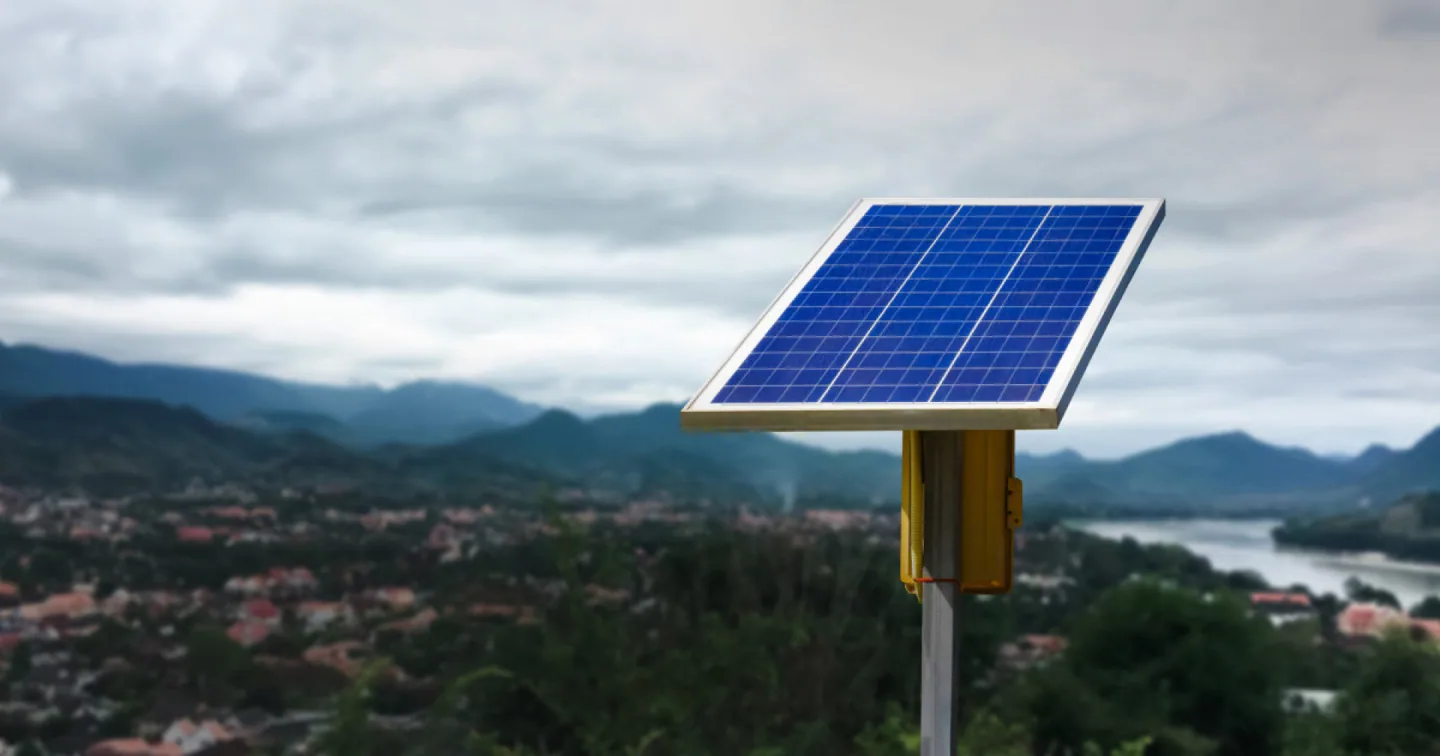
Imagen del caso Teltonika Networks: Hotspots Wi-Fi remotos alimentados con energía solar
Imagen del caso publicado por Teltonika Networks
SectorCiudades inteligentes
Proyecto / integradorBartech
Equipo documentadoRUT956
Referencia originalTeltonika Networks
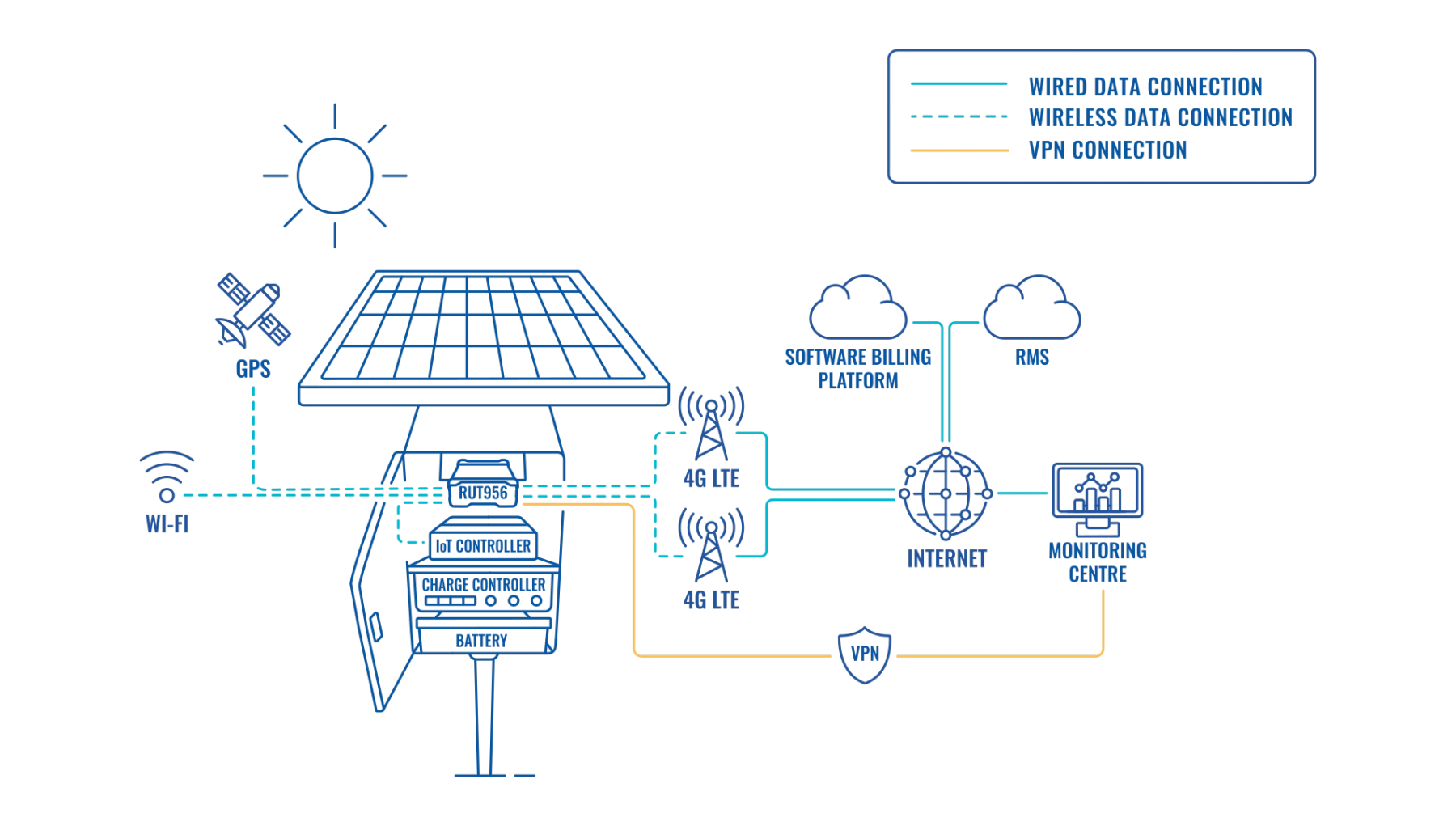
Esquema técnico del caso

Topología de la solución

El diagrama original muestra los equipos y enlaces que componen esta aplicación. Amplíalo para revisar sus conexiones.

Topología Teltonika del hotspot solar: panel, batería y controlador alimentan el RUT956; IoT y usuarios se conectan por LTE y Wi-Fi.Ampliar diagrama
Topología Teltonika del hotspot solar: panel, batería y controlador alimentan el RUT956; IoT y usuarios se conectan por LTE y Wi-Fi. Fuente: Solar Powered Remote Wi-Fi Hotspots · Teltonika Networks
Recorrido de datos

Panel solar → controlador de carga y batería → RUT956; controlador IoT → Ethernet/serial → RUT956 → LTE → nube de monitoreo; RUT956 → Wi-Fi para usuarios locales.

El reto operativo

Qué necesitaba resolver el proyecto

En sitios alejados puede no haber conexión fija ni red eléctrica. Llevar infraestructura hasta un único punto de acceso puede ser costoso, por lo que la conectividad y la energía deben funcionar de manera autónoma.

La solución conectada

Cómo se integran los equipos

Bartech instaló el RUT956 en una estación de hotspot alimentada por un panel solar, una batería y un controlador de carga. Un controlador IoT recopila datos del sistema energético y utiliza el enlace del router para enviarlos a la plataforma de monitoreo; el hotspot ofrece Wi-Fi a usuarios cercanos.

Desglose de arquitectura

Así trabaja cada parte de la red

La implementación debe seguir las interfaces y protocolos descritos en la ficha del producto y en la documentación de los equipos conectados.

  1. 01

    El panel solar alimenta la batería mediante el controlador de carga.

  2. 02

    El RUT956 recibe energía del sistema autónomo y establece el enlace LTE.

  3. 03

    El controlador IoT remite telemetría de energía al sistema remoto.

  4. 04

    La función hotspot del RUT956 distribuye Wi-Fi en el área de cobertura local.

Dónde aplica

Aplicaciones de esta arquitectura

  • Wi-Fi en zonas rurales y remotas
  • Puntos de conectividad autosuficientes
  • Supervisión de sistemas solares fuera de red
Antes de diseñar

Puntos técnicos que debes validar

La topología es una referencia. La selección final depende de las condiciones del sitio y los equipos reales.

  • Calcular consumo total y autonomía de panel y batería según radiación local.
  • Validar cobertura LTE, antenas y capacidad para usuarios simultáneos.
  • Dimensionar gabinete, ventilación, protección eléctrica y puesta a tierra.
  • Definir límites de datos, portal/seguridad Wi-Fi y acceso de administración.
Resultados esperados

Qué habilita esta conectividad

01

Punto de acceso desplegable sin acometida eléctrica fija.

02

Telemetría del sistema solar junto con el servicio Wi-Fi.

03

Administración remota de la conectividad cuando hay cobertura celular.

Ver contenido original de Teltonika Networks (inglés)

Highlights

✔ Bartech is an Israeli provider of IoT solutions, combining Edge AI, Vision, and IoT to deliver human-like smart applications.

✔ Bartech chose Teltonika’s RUT956 mobile router for its solar-powered Wi-Fi hotspot stations. This dual-band router not only provides LTE Cat 4 connectivity in rural areas, but also enables remote monitoring and management thanks to RMS Connect support.

✔ The RUT956 mobile router is the perfect device for the job thanks to its dual SIM functionality with auto-failover, compact and durable design, and a wide range of interfaces—including RS232, RS485, four RJ45 connectors, and six I/Os.

The challenge – connecting the rural

In 2023, 57% of the world’s population was living in cities. This percentage goes higher in the Americas and lower in Africa, with other regions falling somewhere on the spectrum. According to the UN, the global percentage is expected to reach 68% by 2050.

Living in urban areas, like all things, comes with pros and cons. One of the better pros is easy access to connectivity thanks to available infrastructure, leading to a higher rate of Internet usage in cities compared to rural areas, where said infrastructure isn’t as prevalent.

In other words, Internet access remains a challenge to 43% of the population. While this number will fall to 32% within a few decades, it would still represent over 3 billion individuals worldwide.

It’s no surprise, then, that IoT solutions providing Internet access in rural areas aren’t a mere quality of life, but a substantial game changer to how people in those areas live, interact with the world, and become benefiters of modern technological innovations.

How do such solutions work, and where does their connectivity come from?

The solution – Solar-powered connectivity

Connectivity may not be a natural resource in rural areas, but sunlight definitely is. Our partner, Bartech, implements self-sufficient, solar-powered Wi-Fi hotspots using Teltonika’s RUT956 mobile router.

These Wi-Fi hotspot stations utilise a solar panel connected to a battery and charge controller to generate, store, and manage solar energy. Also connected is an IoT controller, which collects power efficiency data.

This data is transmitted via the IPSec protocol to a remote monitoring centre thanks to the same mobile router that creates the Wi-Fi hotspot—the RUT956.

This 4G router provides LTE Cat 4 connectivity and broadcasts its wireless signal thanks to its Wi-Fi 4 capabilities. In case 4G is unavailable in any given area this solar energy solution is installed in, the RUT956 is also backward compatible with 3G and 2G. In addition, this dual-band router is equipped with GNSS capabilities, enabling the monitoring centre to know the location of each Wi-Fi hotspot station.

As this is a self-sufficient solar energy solution, ensuring an uninterrupted connection is a must. To that end, this mobile router has dual SIM slots with auto-failover, backup WAN, and other switching scenarios. These help maintain a stable connection via seamless switching from one Internet source to another in case of any interruptions.

The RUT956 is perfect for this IoT solution in no small part due to its hardware. Compact sizing and sturdy aluminium housing with plastic panels make it built to last and easy to install in tight spaces. A wide range of interfaces enable the connection of different end devices with no need for additional adapters. These interfaces include four RJ45 connectors, an RS485 connector, an RS232 port, and six I/Os.

In addition, Bartech also deploys the Connect suite of our Remote Management System (RMS). Using RMS Connect, the remote monitoring centre uses the RUT956 mobile router to access the end devices of this IoT solution, such as the solar panel, via the HTTP, HTTPS and SSH protocols.

This makes for expert remote monitoring and management of this solar energy solution, eliminating the need to travel to the location of any given Wi-Fi hotspot station to perform any sort of maintenance work.


Distribuidor oficial en Colombia

Aplicación potencial en Colombia

Esta referencia internacional puede orientar una evaluación para ciudades inteligentes en Colombia. La publicación original describe el proyecto en su contexto; cualquier adaptación local debe validar cobertura, interfaces, seguridad y condiciones del sitio.

Implementación y compatibilidad

Preguntas frecuentes

Valida el modelo exacto, las interfaces y las condiciones de cobertura antes de llevar el diseño a campo.

¿Qué equipos Teltonika aparecen en este caso?

La referencia documentada incluye RUT956. La selección final debe considerar modelo, interfaces, cobertura, firmware y disponibilidad local.

¿Cómo se transmiten los datos de la aplicación?

Panel solar → controlador de carga y batería → RUT956; controlador IoT → Ethernet/serial → RUT956 → LTE → nube de monitoreo; RUT956 → Wi-Fi para usuarios locales.

¿Qué se debe revisar antes de implementar una solución similar?

Calcular consumo total y autonomía de panel y batería según radiación local. Validar cobertura LTE, antenas y capacidad para usuarios simultáneos. Dimensionar gabinete, ventilación, protección eléctrica y puesta a tierra.

Distribuidores oficiales en Colombia

Revisemos tu topología y los equipos que necesitas conectar.

Compártenos el modelo de tus equipos, las interfaces, la ubicación y el tipo de conexión disponible. Un asesor de OptimusTech puede ayudarte a evaluar la referencia Teltonika adecuada.

Solicitar asesoría
Adaptación en español de la referencia publicada por Teltonika Networks: Solar Powered Remote Wi-Fi Hotspots. Diagrama y material visual atribuidos a Teltonika Networks. La página no implica que OptimusTech haya ejecutado el proyecto original.