
Envíos a toda ColombiaCompra segura y protegidaFacturación electrónicaAsesoría especializada
Industria y automatización · caso documentado

The Connectivity Core of CERNbot

Caso de uso publicado por Teltonika Networks: The Connectivity Core of CERNbot. Revisa los equipos, el texto original y la topología disponible.

RUT956
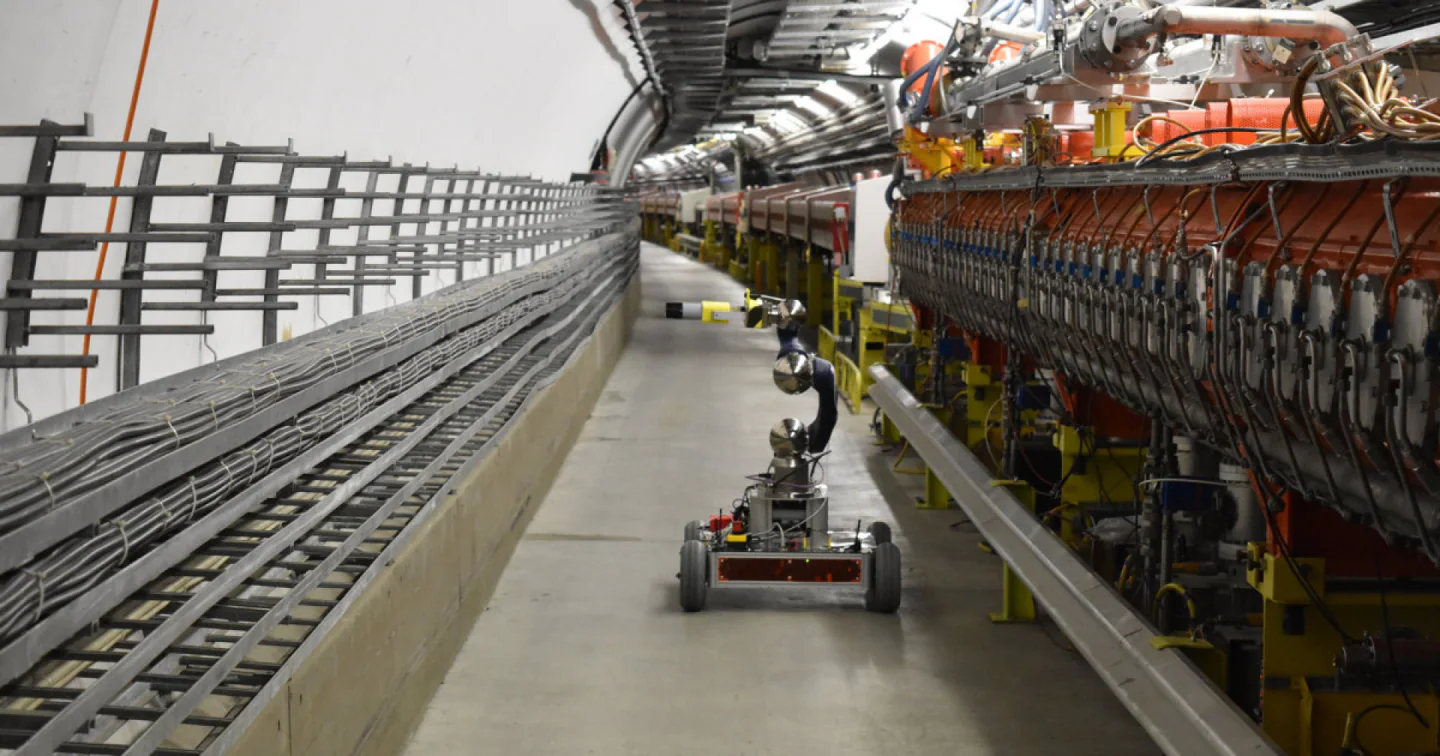
Imagen oficial del caso Teltonika Networks: The Connectivity Core of CERNbot
Imagen del caso publicado por Teltonika Networks
SectorIndustria y automatización
Proyecto / integradorCaso publicado por Teltonika Networks
Equipo documentadoRUT956
Referencia originalTeltonika Networks
Esquema técnico del caso

Topología de la solución

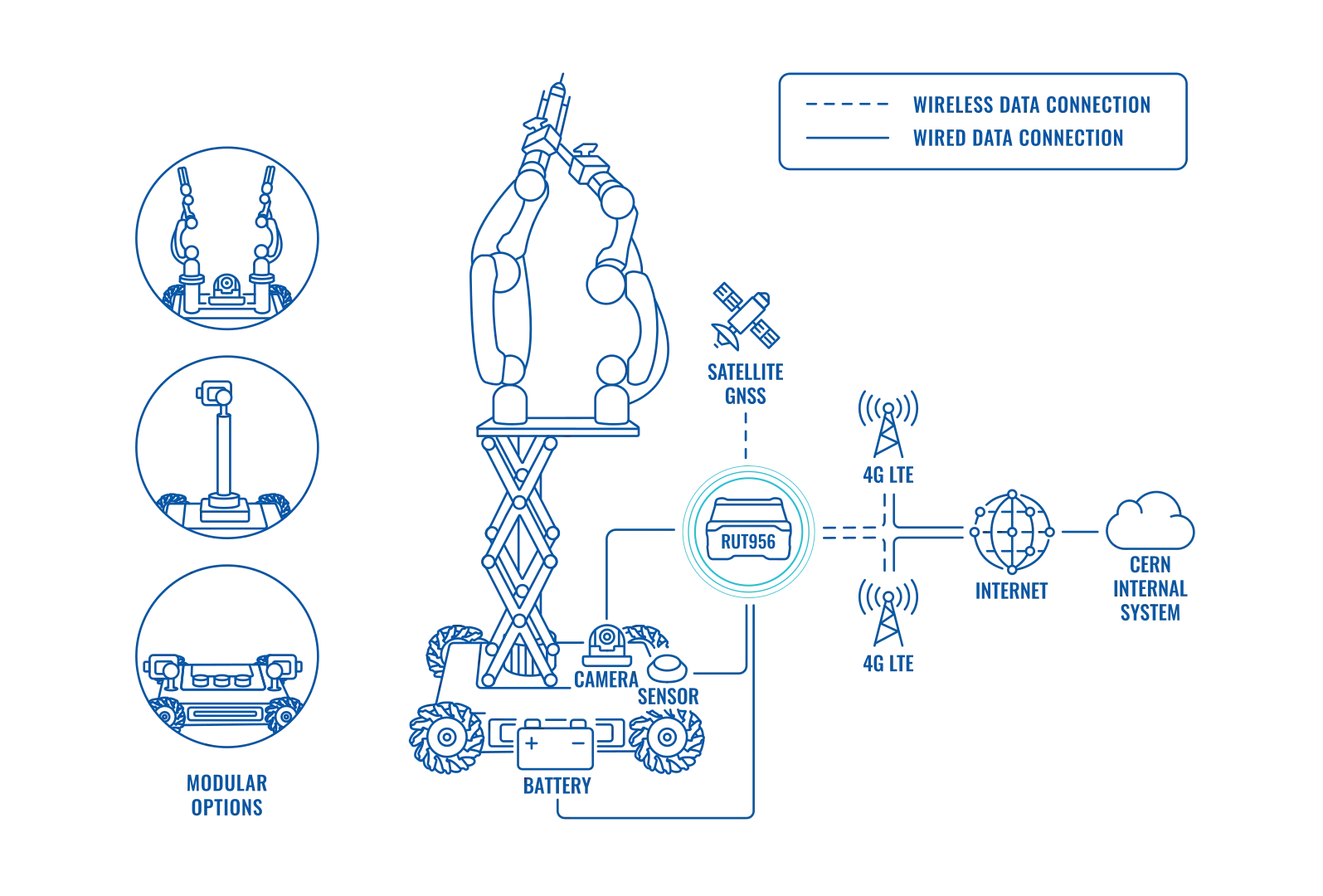
El diagrama original muestra los equipos y enlaces que componen esta aplicación. Amplíalo para revisar sus conexiones.

Diagrama de la arquitectura descrita en el caso “The Connectivity Core of CERNbot”, publicado por Teltonika Networks.Ampliar diagrama
Diagrama de la arquitectura descrita en el caso “The Connectivity Core of CERNbot”, publicado por Teltonika Networks. Fuente: The Connectivity Core of CERNbot · Teltonika Networks
Recorrido de datos

Equipos de la aplicación → RUT956 → enlaces y plataforma descritos en el caso oficial. El recorrido exacto se detalla en el artículo y la topología de la fuente.

Contenido fuente · inglés

Caso publicado por Teltonika Networks

Se conserva el relato original y se presenta a continuación la oportunidad de evaluación para Colombia.

HIGHLIGHTS

✔ CERN needed a versatile connectivity device that would allow its multitasker CERNbot to connect to an extensive range of devices using different interfaces.

✔ It chose our RUT956, primarily due to its numerous I/Os that match the level of adaptability CERBbot operates with

✔ Its industrial design, built-in security features, and the ability to connect CERNbot to CERN’s internal network add to RUT956 being a suitable, integral core of this highly-adaptable solution.

THE CHALLENGE – ADAPTABILITY OVER SPECIALIZATION

The European Organization for Nuclear Research, or CERN for short, carries out research in a myriad of complex ways. Many of them involve tasks that cannot be performed by human hands due to hazards inherent to the experiments, such as ionization radiation. In theory, CERN could favor specialization and develop a fleet of specialized robots to perform those tasks, each one dedicated to solving a particular task. But CERN isn’t synonymous with innovation because of a low-hanging-fruit approach to problem-solving (or creating tiny black holes and changing the timeline, for that matter). Rather, because it aims for the fruit at the top of the tree – the one that’s harder to get to but is all the better for it.

In practice, this means creating a robot that’s compatible with many different “add-ons,” allowing it to easily and quickly shift from one task to another and serve as something of a Swiss army knife. Such a robot was indeed created, and it goes by the name: CERNbot.

However, to perform its many tasks, CERNbot must be able to communicate with and relay data from many different devices via many different interfaces. In other words, it cannot operate at maximum adaptability if its connectivity capabilities aren’t equally adaptable. How did CERN solve this issue?

THE SOLUTION – A CORE CONNECTIVITY

When maximizing CERNbot’s connectivity capabilities, CERN chose our RUT956 cellular router to be part of its core and help it integrate with an extensive roster of devices. This allows CERNbot to perform a long list of research tasks, including sample extraction, installation, reverse engineering, milling, lifting, quality control, chemical monitoring, and more.

These are all achieved in no small part thanks to RUT956’s numerous I/Os, which raise the number of interfaces CERNbot can integrate with and devices thereof. In addition, this router provides a reliable and secure connection between CERNbot and CERN’s internal network, which stores all data CERNbot collects and is how scientists control it and get real-time critical statuses, such as its battery voltage.

Dual-SIM functionality, low power consumption, built-in VPN and other security features, and industrial design all make RUT956 suitable for the different hazardous environments CERNbot operates in and helps it make science happen routinely and efficiently.

Distribuidor oficial en Colombia

Aplicación potencial en Colombia

Esta arquitectura puede servir como referencia para evaluar plantas, bodegas, agricultura, minería y mantenimiento industrial en Colombia. La ficha original corresponde a otro contexto y no prueba un despliegue local; valida cobertura, bandas, interfaces, seguridad y normativa antes de adaptar el diseño.

Implementación y compatibilidad

Preguntas frecuentes

Valida el modelo exacto, las interfaces y las condiciones de cobertura antes de llevar el diseño a campo.

¿Qué modelos Teltonika aparecen en la ficha oficial?

La referencia cita RUT956. Confirma interfaces, variantes y disponibilidad con OptimusTech antes de diseñar la solución.

¿El diagrama de esta ficha es el original de Teltonika?

Sí. Es el diagrama publicado en el caso oficial de Teltonika Networks y se enlaza directamente desde esta ficha.

¿El proyecto está implementado en Colombia?

La fuente no identifica este caso como un despliegue en Colombia. Aquí se presenta como una referencia potencial para evaluar; no se atribuye a OptimusTech una implementación del proyecto original.

Distribuidores oficiales en Colombia

Revisemos tu topología y los equipos que necesitas conectar.

Compártenos el modelo de tus equipos, las interfaces, la ubicación y el tipo de conexión disponible. Un asesor de OptimusTech puede ayudarte a evaluar la referencia Teltonika adecuada.

Solicitar asesoría
Referencia y contenido técnico fuente de Teltonika Networks: The Connectivity Core of CERNbot. Diagrama y material visual atribuidos a Teltonika Networks. La página no implica que OptimusTech haya ejecutado el proyecto original.