

Highlights
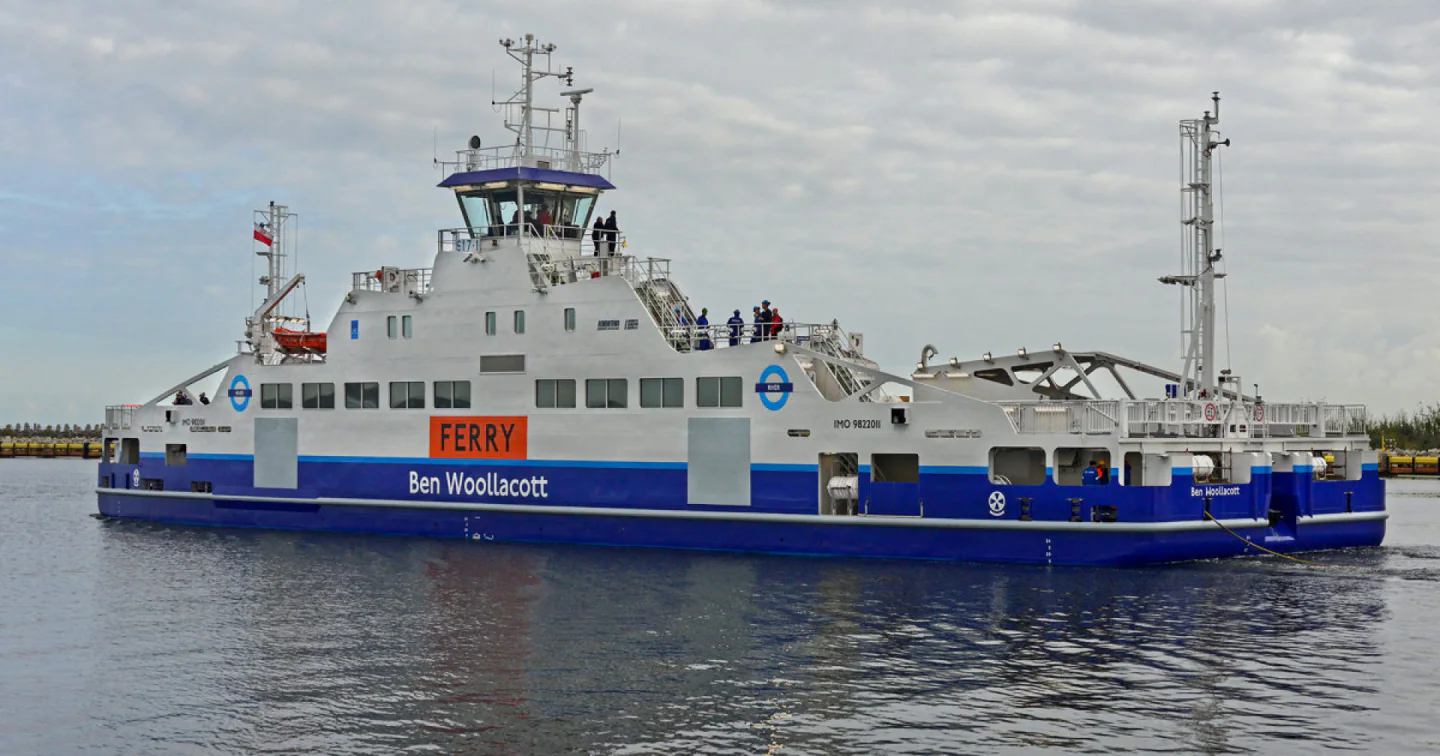
✔ STRATUS Bilişim Sistemleri, an Istanbul-based software engineering and distribution company, undertook a challenge to enhance the weak Internet signals within ferries in Istanbul, Turkey. This initiative was crucial, as water entertainment ventures in Turkey increasingly rely on good network infrastructure.
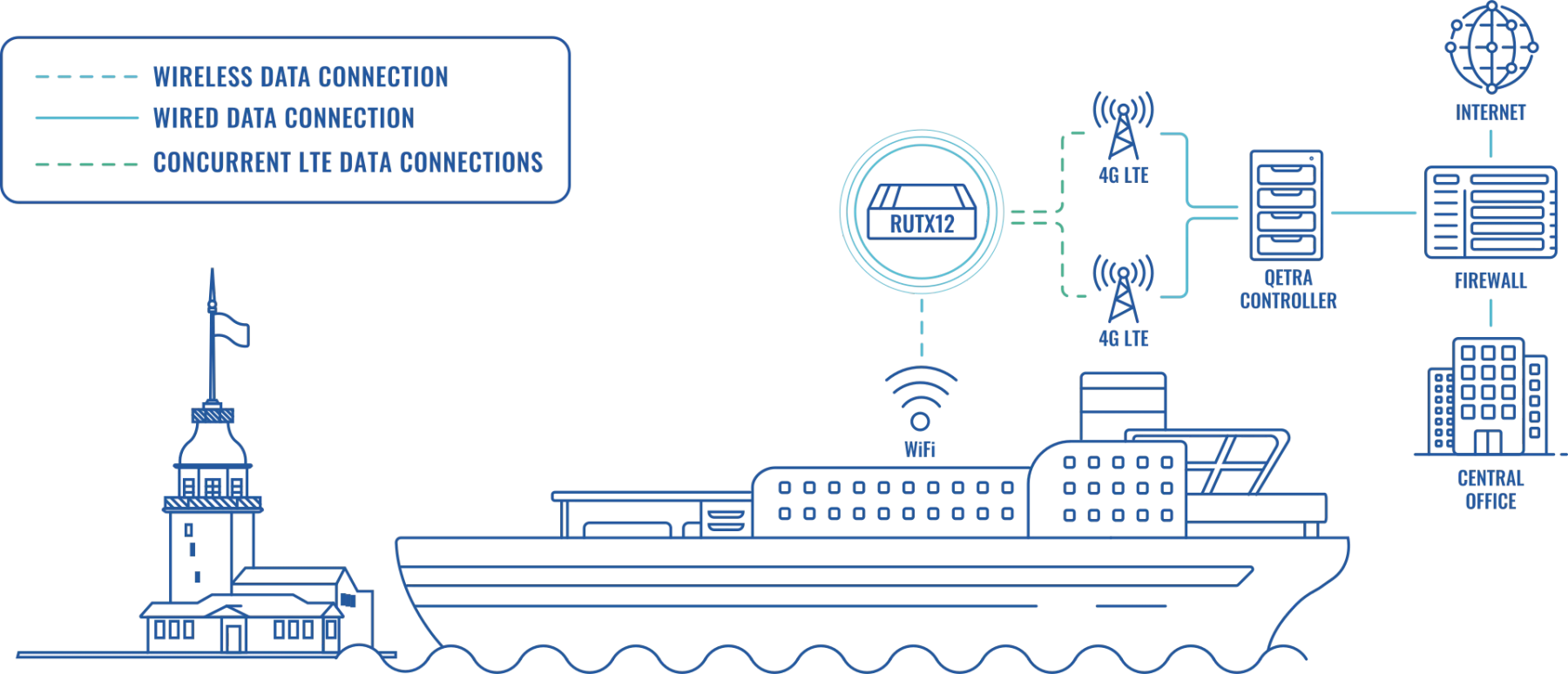
✔ The challenge was overcome by employing the company’s Qetra SDWAN Suite software in combination with the Teltonika Networks RUTX12 Wi-Fi router. The solution ensured consistent network connectivity for ferry equipment and passengers, regardless of their distance from the shore.
✔ Equipped with SD-WAN capabilities, the 4G router handles heavy data traffic with ease. Thanks to its failover functionality and dual cellular modems, the device can switch between mobile services seamlessly, facilitating dual-band Wi-Fi connections to boost data throughput and resilience to network disturbances.
The challenge – surrounded by water, divided by continents
Ferries are one of the most common modes of transportation in Istanbul, with over 24 million passengers yearly. It’s highly popular for both locals who use ferries as public transportation and tourists who want to seek the experience of travelling around the city. However, a significant challenge faced by such transportation is the inadequate network connectivity in their IoT networks.
The marine industry is known for robust network infrastructure being difficult to achieve, as there are no antennas floating around to support wireless solutions. This is an issue for cities like Istanbul that heavily rely on great user experience and must ensure seamless network connectivity for their clients, whether for accessing the internet, maintaining online connections, or working remotely.
Another challenge is the location of Istanbul itself, as the city is split between Europe and Asia. This means that the solution can’t rely only on one ISP and their source of Internet, as potential roaming costs from switching between different ISPs can quickly add up.
So, when establishing network infrastructures for marine transportation facing such an issue, wireless solutions must promise that when ferries change their geographical location, the network connectivity signal strength remains robust and not too costly.
The solution – voyage to connectivity unfettered by location
Committed to providing Istanbul ferries with a robust wireless solution, STRATUS opted to resolve the connectivity issue. The company integrated the Teltonika Networks RUTX12 Wi-Fi router with its Qetra SDWAN Suite software, forming a cohesive solution that eliminated all network disruptions and Wi-Fi dead spots.
Wondering how did they did that?
The RUTX12 Wi-Fi router boasts a unique feature that sets it apart from the rest – it has two LTE Cat 6 cellular modems, enabling dual simultaneous connections and offering redundant failover.
This failover capability is particularly crucial in situations where a changing location necessitates a Wi-Fi router to seamlessly switch mobile connectivity between different ISPs. This can help in lowering ISP service expenses by reducing the need for roaming on other networks. Having redundant failover allows the cellular router to sustain uninterrupted connectivity for the entire ferry’s network infrastructure through two SIM cards simultaneously.
An additional feature of the RUTX12 is none other than band locking. The modem employed within the RUTX12 cellular router supports this function, which you can use to manually select the preferred bands and force connection through the specified frequency bands. This can ultimately improve the quality and speed of mobile connection.
In synergy with the RUTX12 cellular router’s software development kit (SDK) and the Qetra SDWAN Suite software, STRATUS managed to incorporate L2 communication capabilities, enhancing the overall performance of its wireless solution.
All of this enabled the RUTX12 Wi-Fi router to serve as a hotspot, offering customisable accessibility settings or permissions. This not only improved the solution by making it more secure and resilient to data breaches but also exemplified well-thought-out network security solutions.
Now, if you were to set up a similar network infrastructure but want to attain remote management and remote monitoring capabilities of the RUTX12 Wi-Fi router, it comes with no surprise that the Teltonika Networks RMS platform would be the way to go.
The RMS Management service provides any networking solution with extensive control and maintenance features. This includes multi-parameter configuration, backup control, location monitoring, and much more. Such enhancements not only preserve the integrity of the solution but also amplify control over the entire wireless system.