Envíos a toda ColombiaCompra segura y protegidaFacturación electrónicaAsesoría especializada
Industria y automatización · caso documentado

Gestión remota de líneas de producción con TRB255

Un gateway con puertos seriales, entradas y Ethernet integra controladores antiguos y modernos para supervisión y mantenimiento remoto de fábrica.

TRB255RMS
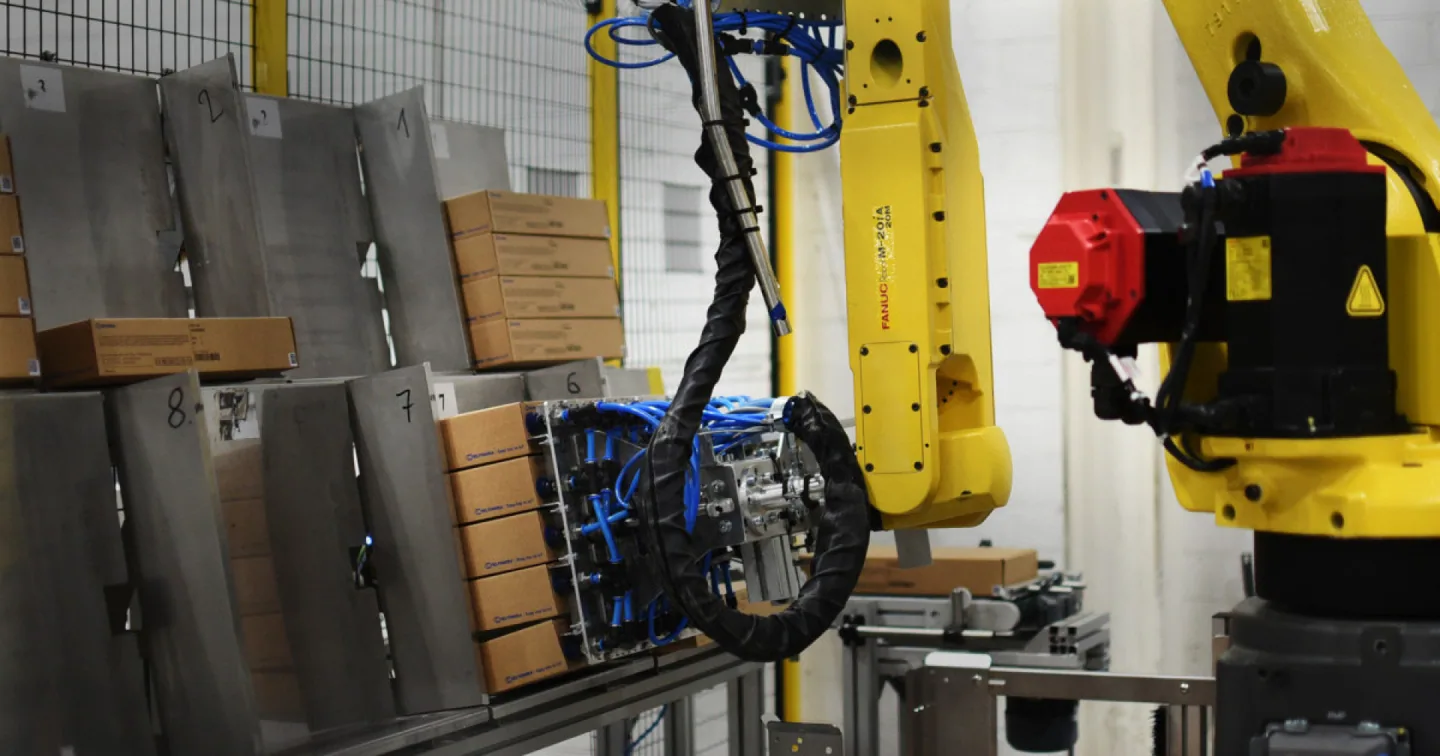
Imagen del caso Teltonika Networks: Gestión remota de líneas de producción con TRB255
Imagen del caso publicado por Teltonika Networks
SectorIndustria y automatización
Proyecto / integradorPlanta de manufactura con sistemas heredados
Equipo documentadoTRB255 · RMS
Referencia originalTeltonika Networks
Esquema técnico del caso

Topología de la solución

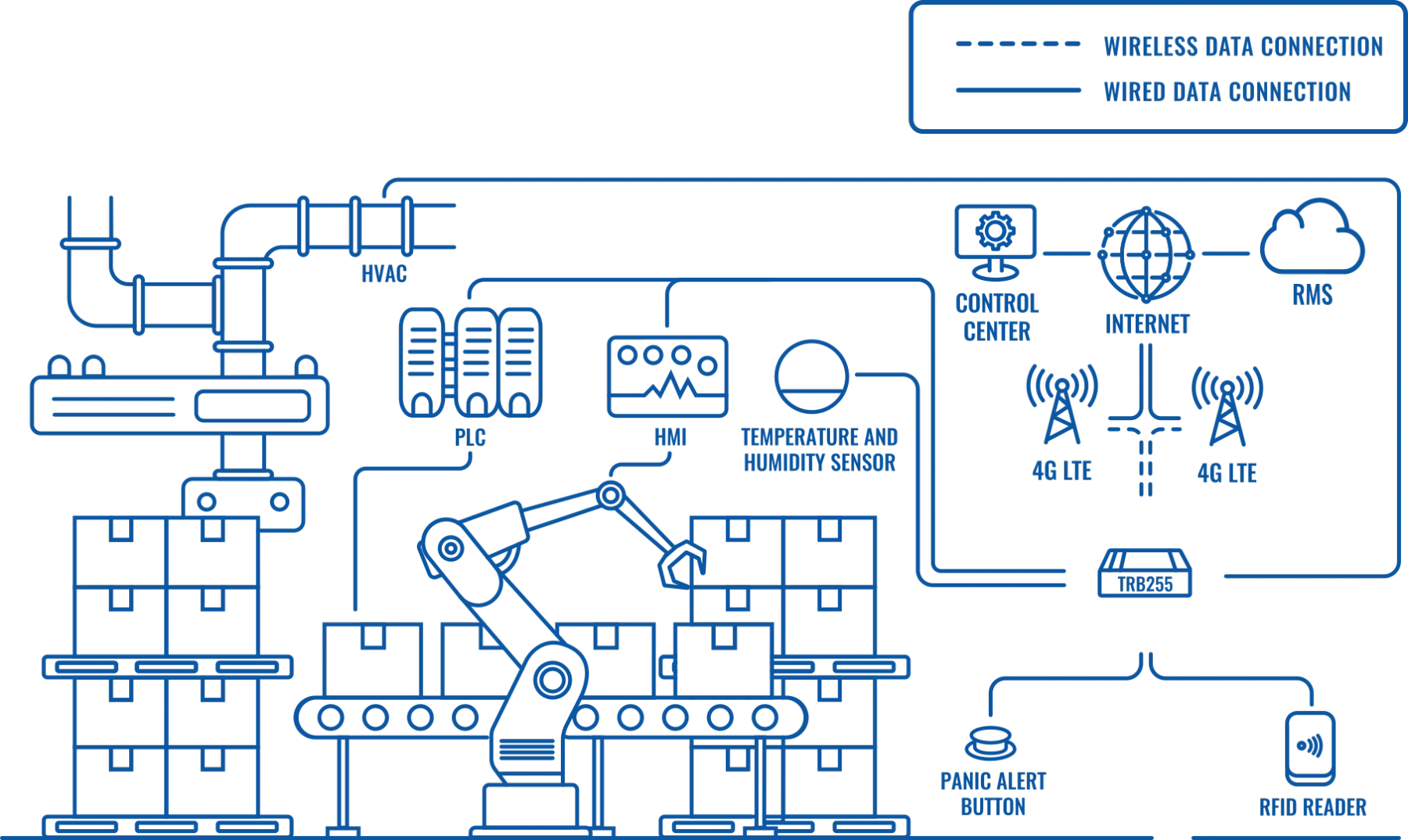
El diagrama original muestra los equipos y enlaces que componen esta aplicación. Amplíalo para revisar sus conexiones.

Diagrama Teltonika para planta de manufactura: PLC, HMI, HVAC, sensores y señales de alarma integrados mediante el TRB255.Ampliar diagrama
Diagrama Teltonika para planta de manufactura: PLC, HMI, HVAC, sensores y señales de alarma integrados mediante el TRB255. Fuente: Manufacturing Facility Remote management · Teltonika Networks
Recorrido de datos

PLC por RS232, HMI por RS485, HVAC por Ethernet y sensores por entrada analógica → gateway TRB255 → red celular → centro de operación y administración remota RMS.

El reto operativo

Qué necesitaba resolver el proyecto

Las líneas de producción suelen renovarse por etapas. En una misma planta conviven PLC, HMI, HVAC y controles de seguridad con interfaces distintas; sustituir todo el equipo para obtener conectividad puede ser costoso y poco práctico.

La solución conectada

Cómo se integran los equipos

El TRB255 funciona como punto de integración. El PLC puede comunicarse por RS232, la HMI por RS485 y el sistema HVAC por Ethernet; las entradas analógicas reciben datos de sensores de temperatura y humedad. También se pueden integrar señales discretas como un botón de alarma o un lector RFID. RMS permite acceso remoto a los equipos compatibles para soporte y administración.

Desglose de arquitectura

Así trabaja cada parte de la red

La implementación debe seguir las interfaces y protocolos descritos en la ficha del producto y en la documentación de los equipos conectados.

  1. 01

    Identificar interfaces seriales, Ethernet, analógicas y digitales de los equipos existentes.

  2. 02

    Conectar PLC, HMI, HVAC, sensores y señales de seguridad a los puertos correspondientes del TRB255.

  3. 03

    Definir segmentación y reglas de comunicación entre la red celular y el sistema de control.

  4. 04

    Usar RMS para las tareas remotas habilitadas y autorizadas por el equipo de planta.

Dónde aplica

Aplicaciones de esta arquitectura

  • Integración de automatización heredada
  • Monitoreo de condiciones ambientales de planta
  • Acceso remoto para mantenimiento industrial
Antes de diseñar

Puntos técnicos que debes validar

La topología es una referencia. La selección final depende de las condiciones del sitio y los equipos reales.

  • Confirmar tensión, pinout, velocidad y protocolo de cada puerto serial.
  • Validar rangos eléctricos y tipo de señal para entradas analógicas/digitales.
  • Revisar la compatibilidad de la solución con controles de ciberseguridad OT.
  • Definir qué usuarios pueden acceder a cada equipo y cómo se auditan las sesiones.
Resultados esperados

Qué habilita esta conectividad

01

Conectar equipos de distintas generaciones mediante una sola plataforma de red.

02

Aprovechar las interfaces disponibles antes de reemplazar maquinaria.

03

Facilitar tareas de diagnóstico remoto con permisos controlados.

Ver contenido original de Teltonika Networks (inglés)

SUMMARY

In 2020 there were more than 290 thousand manufacturing plants in the US alone. This number is bound to keep increasing as the world industry is ever-growing in size. Such industrial expansion can be hard to keep up with as hiring and training new personnel takes time. With the increase in the efficiency of their factories, companies resort to manufacturing and assembly line automation.

CHALLENGE

When automating manufacturing lines, the upgrades are gradual. This poses the problem of finding a way to connect old and new technology. You need different connections for different interfaces, and that can increase the cost. Purchasing the latest in technology does not guarantee that it will be compatible with the current factory setup. Many production lines have a mix of complex and straightforward components featuring expensive connectivity solutions. So, if you own machines that support many different connections, you need to invest considerably more.

When a malfunction occurs or the software needs an update, the on-site staff usually has sufficient knowledge and training to resolve the issue. However, if the problem is more complex, especially with custom-made machinery, you will need the manufacturers engineer to tackle it. You may face several obstacles addressing this problem, such as distance, travel cost and lines shutting down while maintenance takes place.

So, one of the biggest challenges here is to find a way to interconnect all systems in the factory. The goal is to have their controls be accessible in one convenient place, where on-site staff can monitor the day-to-day processes and experts can have remote access when needed.

SOLUTION

Does the fact that one device from Teltonika Networks can connect a PLC, HMI, RFID, panic alert button and more intrigue you? That little device is the TRB255 industrial M2M gateway. First of all, this gateway can communicate with various devices responsible for working on the manufacturing line thanks to multiple interface ports.

For the primary connections — PLC can be connected via the RS232 serial communication interface, while HMI can take up the RS485. This setup takes care of the central production line machinery. The Ethernet connects the HVAC (Heating, Ventilation and Conditioning) system, which can be adjusted based on the temperature and humidity sensors’ data, connecting to TRB255 through the analog input.

Teltonika industrial gateway can also accommodate all the other supporting systems thanks to its multiple differing connections. Such design can incorporate older components of the assembly line into one system. For example, a panic alert button can connect to one of the digital input/output ports, and another port can accommodate an RFID reader to ensure additional factory security.

While the TRB225 industrial gateway provides a way to incorporate all devices into one network, Teltonika Networks RMS (Remote Management System) lets you access all of it remotely. This setup enables you to reach our products and third-party equipment as if you were there physically and perform troubleshooting, update firmware, and change any settings.

BENEFITS

Backward compatibility with the 2G network allows for installation in facilities using legacy equipment.

The supported power supply voltages range from 9 to 30V, allowing easy integration with industrial components.

Dual-SIM offers automatic failover in case the cellular network connection gets disrupted.

TRB255 offers multiple interfaces, including RS232 and RS485, letting you connect old and new equipment in the same network.

This router is compatible with the Teltonika RMS, which allows you to gather data and manage your Teltonika devices remotely.

WHY TELTONIKA NETWORKS?

Teltonika Networks takes notes from the past while looking forward to the future. This mindset lets us deliver the best IoT solution in the present day. We make sure that our devices will integrate with older systems while maintaining the ever-evolving technological edge.

Interested in more use cases like this? Download our use case catalog!

Distribuidor oficial en Colombia

Aplicación potencial en Colombia

Esta referencia internacional puede orientar una evaluación para industria y automatización en Colombia. La publicación original describe el proyecto en su contexto; cualquier adaptación local debe validar cobertura, interfaces, seguridad y condiciones del sitio.

Implementación y compatibilidad

Preguntas frecuentes

Valida el modelo exacto, las interfaces y las condiciones de cobertura antes de llevar el diseño a campo.

¿Qué equipos Teltonika aparecen en este caso?

La referencia documentada incluye TRB255, RMS. La selección final debe considerar modelo, interfaces, cobertura, firmware y disponibilidad local.

¿Cómo se transmiten los datos de la aplicación?

PLC por RS232, HMI por RS485, HVAC por Ethernet y sensores por entrada analógica → gateway TRB255 → red celular → centro de operación y administración remota RMS.

¿Qué se debe revisar antes de implementar una solución similar?

Confirmar tensión, pinout, velocidad y protocolo de cada puerto serial. Validar rangos eléctricos y tipo de señal para entradas analógicas/digitales. Revisar la compatibilidad de la solución con controles de ciberseguridad OT.

Distribuidores oficiales en Colombia

Revisemos tu topología y los equipos que necesitas conectar.

Compártenos el modelo de tus equipos, las interfaces, la ubicación y el tipo de conexión disponible. Un asesor de OptimusTech puede ayudarte a evaluar la referencia Teltonika adecuada.

Solicitar asesoría
Adaptación en español de la referencia publicada por Teltonika Networks: Manufacturing Facility Remote management. Diagrama y material visual atribuidos a Teltonika Networks. La página no implica que OptimusTech haya ejecutado el proyecto original.