
Highlights
✔ Responding to the industry’s need for reliable data and government requirements, HPT Solutions AG decided to digitalize pressure and density measurements at the rig and connect them directly to the HPT-Cloud.
✔ The challenge was to move away from manual, error-prone data logging and deliver a reliable system that ensures compliance, traceability, and real-time oversight even in remote drilling locations.
✔ Teltonika’s RUT956 LTE router helped to reach this goal by offering cellular connectivity, GPS tagging, Ethernet and Wi-Fi interfaces, and strong security features that turn a drilling site into a connected data recorder.
The Challenge – Making Drilling Data Reliable, Transparent, and Accessible
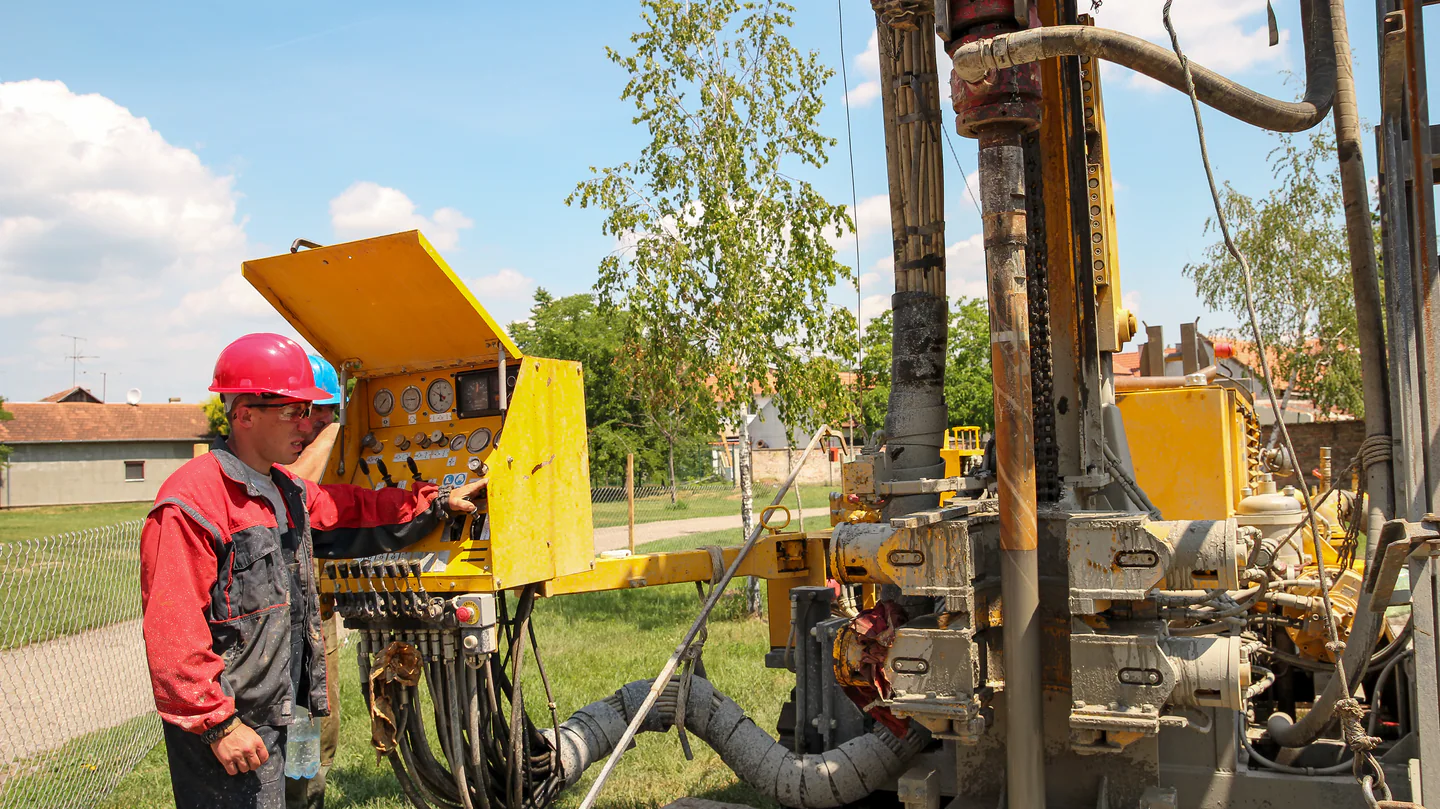
Drilling projects, whether for geothermal energy or construction, depend on precise data to ensure compliance, safety, and accountability. Two key metrics are pressure during drilling and the density of backfill material. These values must be recorded and submitted to authorities as proof of safe and standard-compliant operations. For drilling companies, they are also evidence of quality, forming a digital audit trail that protects them from disputes and liability.
Traditionally, however, data collection has been riddled with problems. Technicians on site often recorded measurements manually, creating errors, incomplete records, or lost data. Even when digital instruments were available, information often stayed isolated at the drilling site. Reporting was slow, requiring manual file transfers, and real-time monitoring by authorities or management was practically impossible.
A second issue was traceability. Without GPS data linked to each reading, there was no guarantee that measurements corresponded to specific drilling coordinates. This gap made auditing and communication between contractors and regulators difficult.
Connectivity posed another challenge. Remote drilling sites demand professional networking devices with backup connectivity and rugged design to ensure reliable and secure data transmission. Without such features any failure would require dispatching technicians to the site, increasing costs and delaying projects.
The challenge was clear: drilling companies needed a way to automatically collect measurement data, enrich it with GPS information, secure it, and make it instantly accessible to all stakeholders, while reducing the need for manual work and on-site interventions.
The Solution – Building a Connected Drilling Site
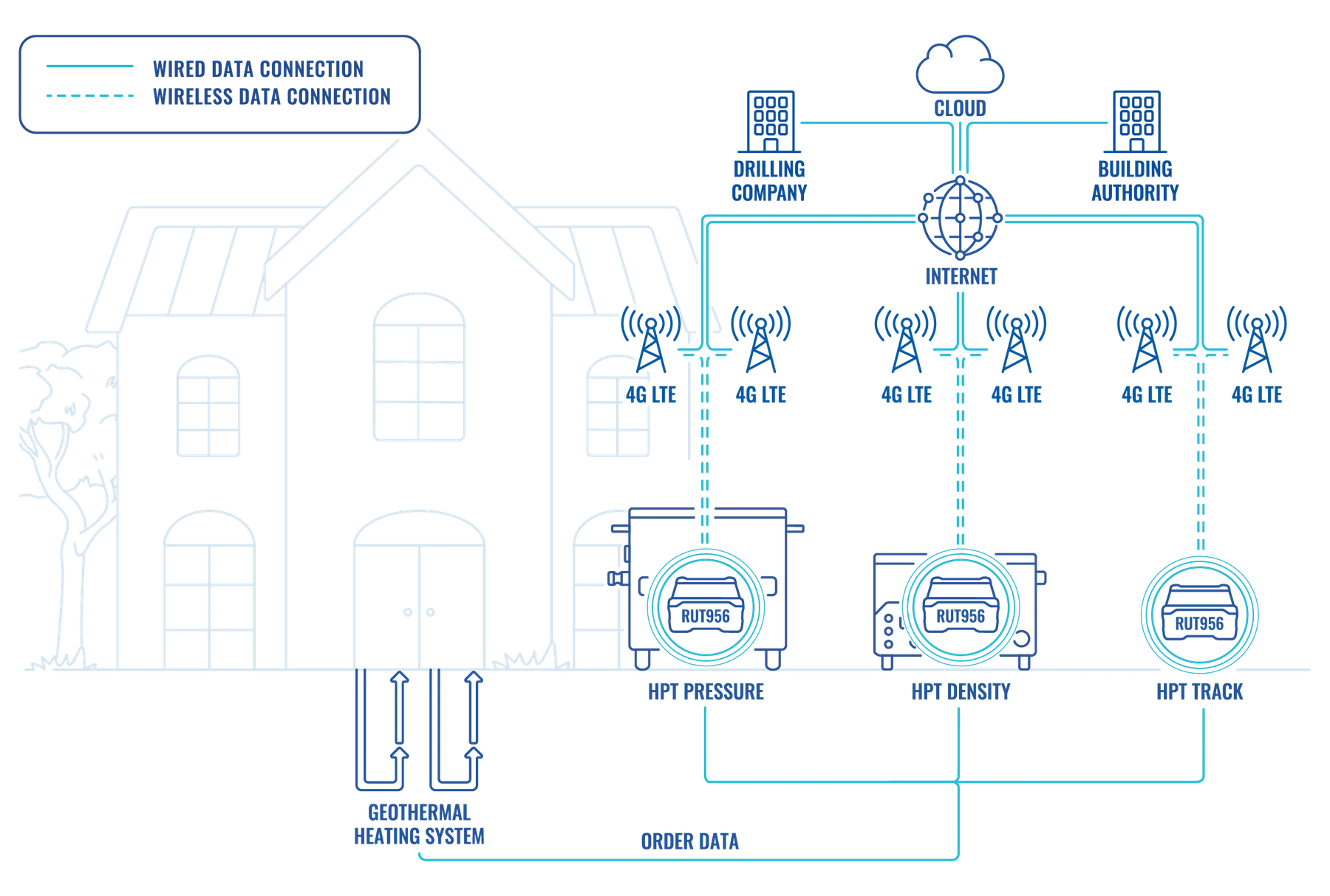
HPT Solutions AG developed this setup around the Teltonika’s RUT956 industrial router installed directly at the drilling rig. The pressure tester and the backfill density meter connect to the router via LAN ports, while an external switch links over Wi-Fi and is controlled through the MQTT protocol. Technicians on site can easily access the devices’ HMIs using laptops or smartphones connected to the router’s Wi-Fi network.
The built-in GPS enriches every dataset with precise drilling coordinates, creating reliable and traceable records. Using LTE Cat 4 connectivity, the RUT956 4G router transmits all information to the HPT-Cloud, where dedicated modules such as HPT-Pressure, HPT-Density, and HPT-Track organize and store it. From there, drilling companies can add and retrieve job data, while authorities receive verified measurement reports in real time.
Security is equally important in this architecture. RUT956, being a WPA3 router, comes with a firewall and whitelisting features, allowing to restrict internet access. At the same time, VPN provides a secure channel for remote monitoring and maintenance. Port forwarding is tightly controlled, and updates are applied only when necessary, ensuring stable, risk-free operation. On top of that, technicians can diagnose issues remotely, cutting down costly and time-consuming site visits.
By combining robust interfaces, LTE uplink, GPS, and industrial-grade security in one compact device, the RUT956 4G router solves the fundamental problems of drilling data management.
The results: automated measurement logs, full traceability, faster reporting to regulators, reduced operational costs, and improved safety on site. Abnormal pressure values can be detected early, backfill density is continuously monitored, and all stakeholders have confidence in the accuracy and transparency of the data.
Looking to modernize and optimize industrial infrastructure? Contact us to see how Teltonika’s devices can support your projects.